Find your GEPCO reference number
Check online bill GEPCO with the 14-digit reference number — your key to every online service: bill check, duplicate, payment and history.
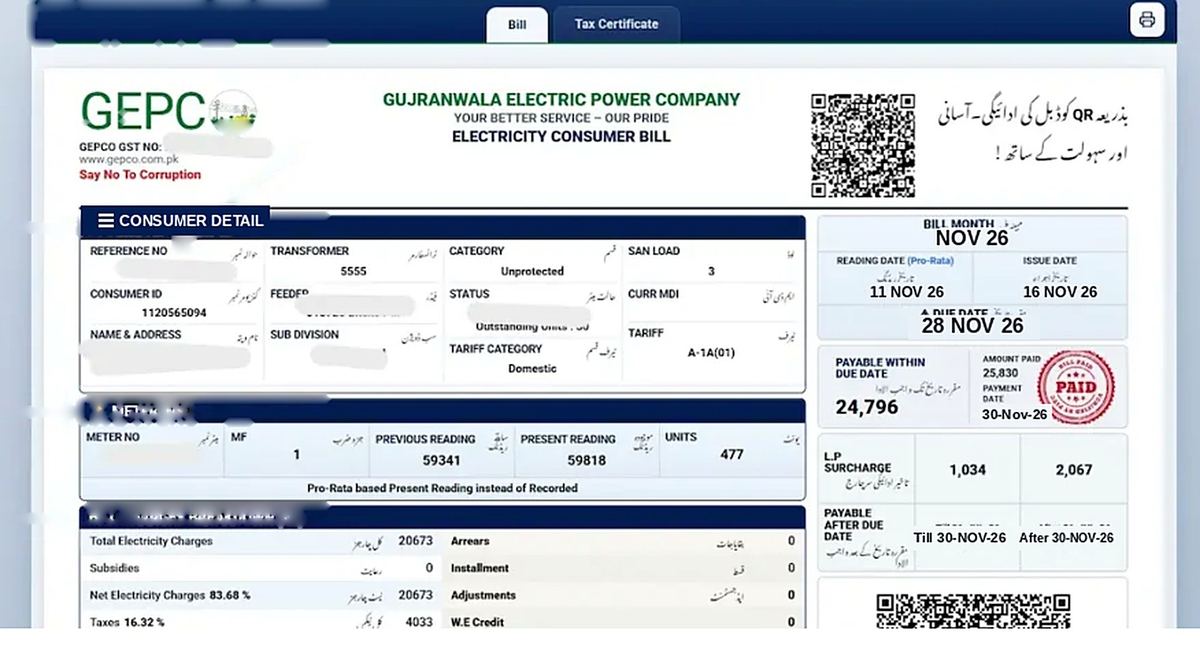
Where it sits
On the top section of any GEPCO bill, near your name, address and tariff. It is printed as grouped digits — spaces do not matter when you type it into the checker.
Reference No vs Customer ID
The reference number is 14 digits and is used for payment everywhere. The customer ID is 10 digits and also works in the checker. Both are printed on every bill and never change for your connection.
No bill at all?
- Ask a family member — many households keep one photographed bill.
- Check your bank / wallet app — past GEPCO payments show the reference number.
- Call 118 or visit your sub-division office with CNIC.
How to read your GEPCO bill
Every figure on the bill, in plain words — so a wrong bill never slips past you.
Top section — your identity
Tip Take a photo of one bill and keep it on your phone. The reference number never changes, so the same number checks every month's bill.
Middle section — your usage
Previous & present reading: the difference is your units (kWh) for the month. Compare the present reading with your actual meter — a mismatch is the most common cause of a wrong bill.
Units & slab: units are priced by the slabs on the Tariff page. Crossing 200 units can cost you protected status.
Bottom section — your charges
Energy cost, fixed charges, fuel & quarterly adjustments, electricity duty, GST, PTV fee, income tax (filer / non-filer), any arrears, and the late-payment surcharge if you pay after the due date. The calculator itemises the same charges as an estimate.
History chart: most bills print roughly 12 months of units, amounts and payment status — the quickest history record you have. See Bill History.